Have companies gone too far with AI job cuts?
Frog Recruitment • March 10, 2026
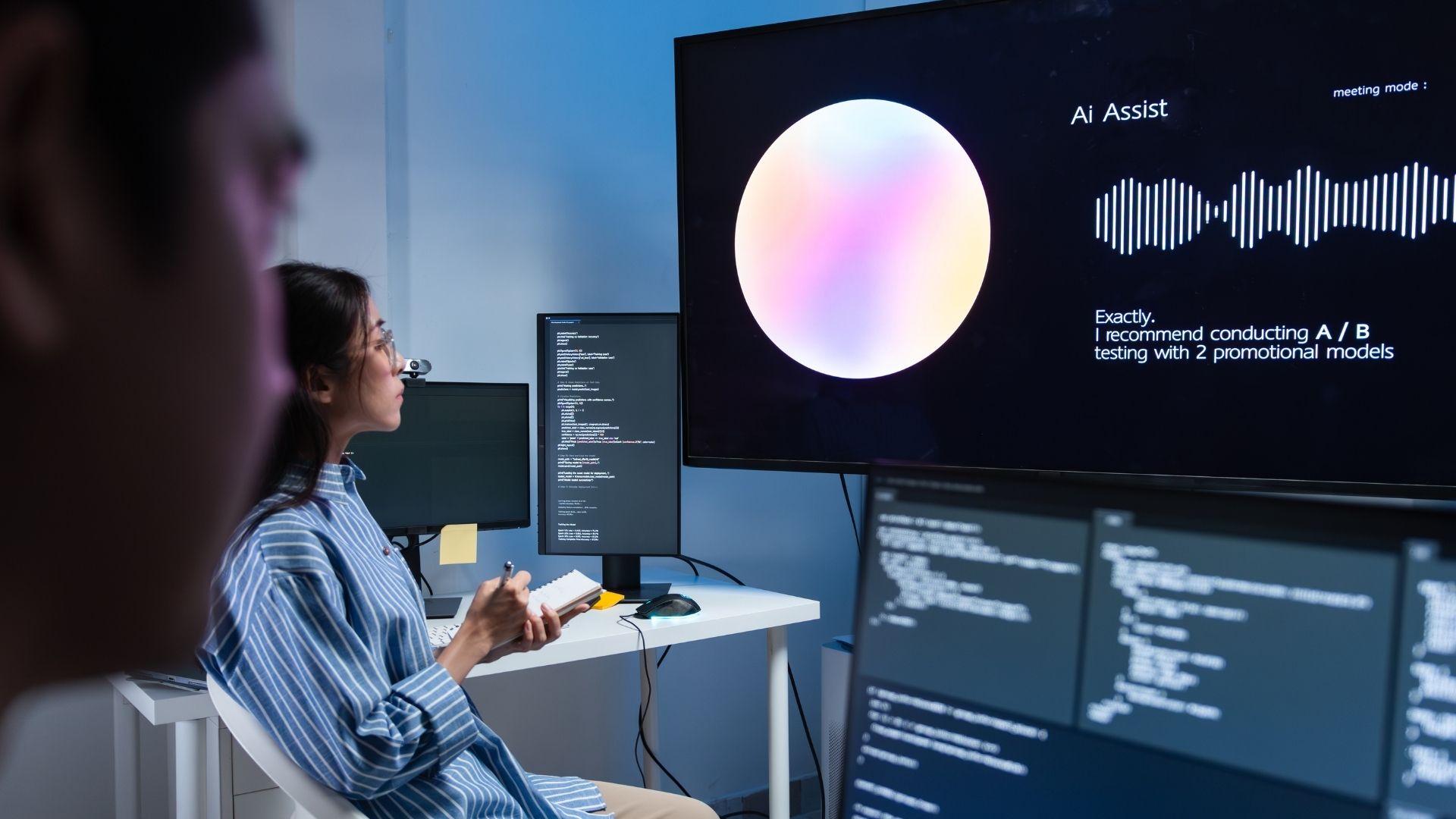
Across many workplaces, artificial intelligence has moved from experiment to everyday tool in a remarkably short space of time. Leaders are under pressure to improve productivity, reduce costs and modernise operations, and AI often appears to offer all three at once. On the surface, the case can seem straightforward: automate repetitive work, streamline service delivery and reduce reliance on manual processes. But the reality is proving more complex.
As more organisations build AI into customer service, administration and knowledge work, an uncomfortable truth is beginning to emerge. Efficiency gains are not always translating into stronger outcomes. In some cases, businesses are discovering that removing people too quickly can create fresh problems around quality, trust, collaboration and oversight. Rather than solving operational challenges, poorly planned AI adoption can simply shift them elsewhere.
The real question for employers is not whether AI has value. It clearly does. The challenge is understanding where it genuinely enhances human capability, where it creates new risks, and how to avoid making short-term decisions that are expensive to reverse later on.
“AI can replace repetitive tasks, not jobs.”
On a recent Australia Market Update, Host Shannon Barlow, NZ Managing Director, was joined by Guest Benny Pan, Founder of InspiraEd, to explore why some employers may be heading into an AI redundancy boomerang. Drawing on recent research and real-world examples, the discussion highlighted a growing gap between the promise of automation and the practical needs of running productive, resilient teams.
A key theme was the difference between replacing a role and automating parts of a role. That distinction matters. As Benny explained, many employers are still treating jobs as if they are made up of entirely automatable outputs, when in reality most roles involve judgement, communication, context and problem-solving alongside repeatable tasks. AI may be highly effective at handling process-heavy work, but that does not mean it can fully substitute for the human contribution surrounding it.
That misunderstanding can lead employers to move too fast. Businesses may introduce AI with the expectation that headcount can be reduced quickly, only to find that service quality slips, review processes become more cumbersome and decision-making suffers. Human oversight remains essential, especially where accuracy, personalisation and risk management are concerned. Even where AI speeds up the first draft of a task, employees often still need to check, edit, validate and refine the output before it is usable.
The conversation also explored why productivity gains may fall short of expectations. While AI tools can improve speed in certain workflows, using them well is not automatic. People need the skills to prompt effectively, assess output quality and understand when AI should and should not be trusted. In practice, this can slow teams down before it speeds them up. Drafting multiple client communications, for example, may be faster with AI support, but only if there is time and capability to review each one carefully. Without that, the risk to quality can outweigh the benefit.
Another important insight was that isolated use of AI tools is very different from a considered, system-wide implementation. Many organisations are still using AI in fragmented ways, such as rewriting emails or generating content on demand, without embedding it into repeatable workflows across teams. That can create the appearance of innovation without delivering meaningful transformation. By contrast, when organisations build shared, structured AI-enabled processes, the impact can be more consistent and scalable.
Culture also plays a major role. For many employees, AI adoption brings uncertainty, especially when new tools are introduced quickly or without clear explanation. Resistance is not always about rejecting change. Often, it reflects concerns about capability, job security, quality standards or simply not knowing how to use the technology with confidence. If these concerns are dismissed, organisations risk creating fear and disengagement at the exact moment they need curiosity and learning.
That is why governance featured so strongly in the discussion. According to Benny, many organisations are not lacking access to AI tools, but they are lacking the structures needed to use them responsibly. Board-level accountability, clear oversight and defined measures of return on investment are still underdeveloped in many businesses. Without governance, AI adoption can become reactive rather than strategic, driven by hype rather than evidence.
The discussion pointed to a more sustainable path: human-centric AI adoption. That means treating AI as a capability enhancer rather than a blunt cost-cutting mechanism. It means auditing where the organisation actually is, rather than assuming maturity because staff have access to popular tools. It means training teams properly, creating space for people to ask questions, admit uncertainty and raise concerns, and then tracking progress against meaningful measures over time.
For employers, the lesson is clear. AI should not be approached as a shortcut to removing people. It should be approached as a way to improve how work gets done, while preserving the human judgement, accountability and connection that organisations still rely on. Businesses that strike that balance are more likely to see lasting value. Those that do not may find themselves rehiring the very capabilities they were too quick to let go.
How can employers adopt AI without creating costly setbacks?
- Separate tasks from roles before making any workforce decisions
- Audit current AI use to understand actual capability and gaps
- Focus on augmentation before considering replacement
- Give employees training, support and space to raise concerns
- Build governance at leadership level with clear accountability
- Track quality, productivity and ROI over the short, medium and long term
Grow your career and team
Get in touch with Frog Recruitment
In business since 2002 in New Zealand, Frog Recruitment is an award-winning recruitment agency with people at our heart. Located across Auckland and Wellington, we specialise in accounting and finance, business support, education, executive, government, HR, legal, marketing and digital, property, sales, supply chain, and technology sectors. As the proud recipients of the 2024 RCSA Excellence in Candidate Care Award, we are dedicated to helping businesses achieve success through a people-first approach.