Your Employees Are Asking AI About Their Rights. What Could Go Wrong?
Frog Recruitment • September 18, 2026
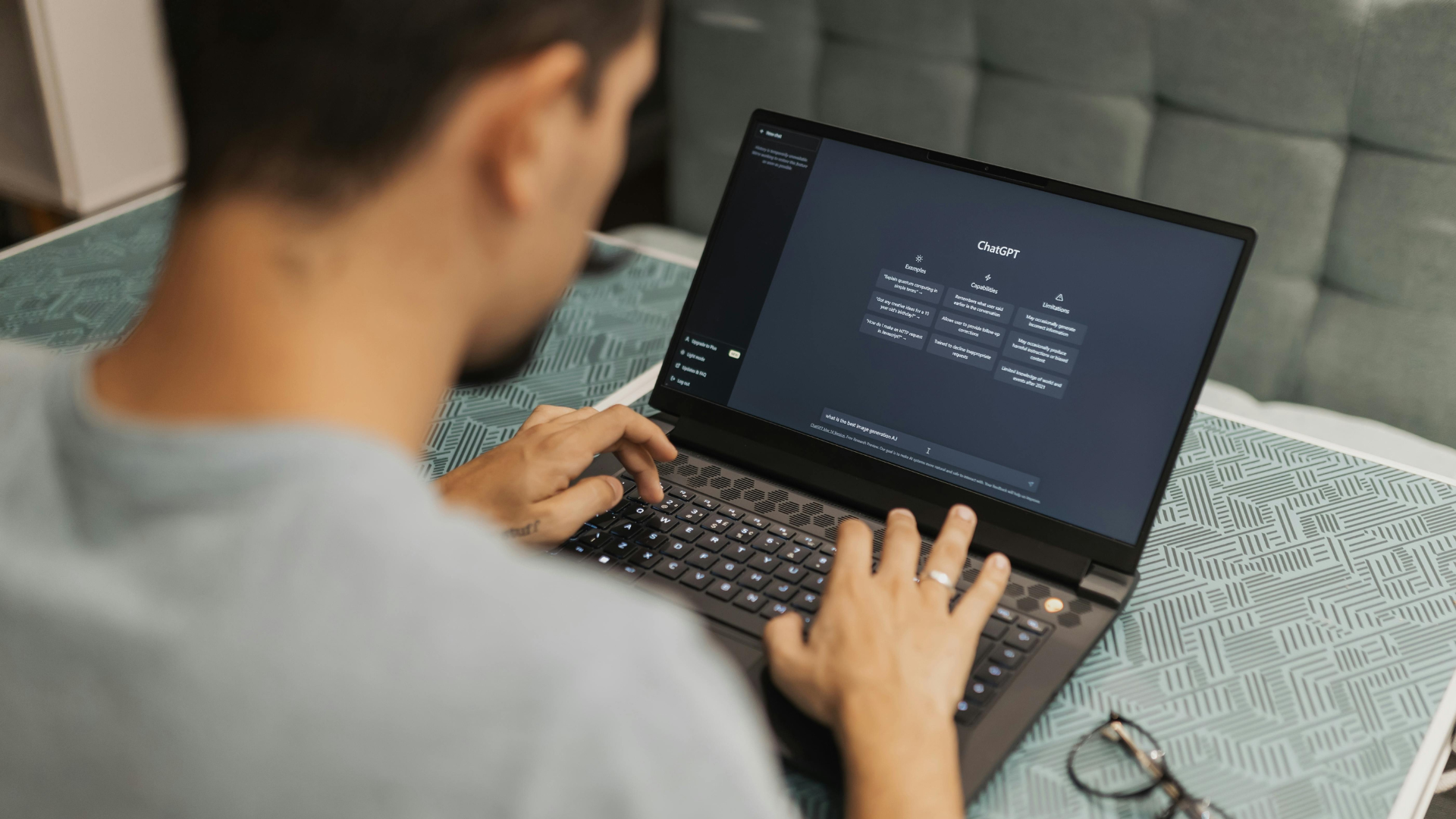
An employee is called into a performance meeting. Before attending, they ask ChatGPT whether the process is fair.
Another employee hears their role could be affected by a restructure and asks an AI tool what their employer is legally required to do.
Someone receives a warning, copies the details into a chatbot and asks whether they have grounds for a personal grievance.
This is increasingly becoming part of the workplace reality in New Zealand.
According to Peninsula New Zealand, employees are turning to artificial intelligence to understand their workplace rights, assess decisions made by their employers and seek guidance on issues including performance management, restructures and dismissals, often before speaking directly with their manager or HR team.
The issue is not that employees have easier access to information. Greater awareness of workplace rights can be positive.
The risk is what happens when an AI-generated answer is treated as authoritative advice.
AI can sound certain even when the situation isn't
Employment issues are rarely as simple as entering a question and receiving a definitive answer.
The correct process can depend on an employee's individual employment agreement, workplace policies, previous correspondence, the circumstances surrounding the issue and applicable New Zealand employment law.
AI does not automatically have all of that context.
It may produce an answer based on incomplete information. It may apply principles from another jurisdiction. An employee may unintentionally frame a prompt in a way that produces a one-sided answer. And generative AI can produce inaccurate information while presenting it confidently.
That creates a new challenge for employers.
HR teams may increasingly find themselves having conversations where an employee arrives with a firm view of what should happen because an AI tool has already told them what their rights are.
The conversation then isn't starting from zero.
New Zealand employers can't simply dismiss what employees bring them
That does not mean an employer can respond with, "ChatGPT is wrong", and move on.
New Zealand employment relationships carry good-faith obligations. Employment New Zealand states that employers and employees must be open, honest and responsive with each other. Employers also need to follow fair processes when dealing with issues such as disciplinary action and dismissal.
That makes the underlying quality of the employer's process more important.
If an employee challenges a restructure, warning or performance process based on something they have read online or generated through AI, the employer should still be able to clearly explain what is happening, why it is happening, what information has been considered and how the employee can respond.
AI may change what employees bring into the conversation. It does not remove the employer's responsibility to run a sound process.
In fact, it arguably exposes weak processes faster.
The bigger issue: employers may not know which AI tools staff are using
There is another layer of risk.
Qualtrics' 2026 Employee Experience Trends research found that only 12% of New Zealand employees who use AI rely exclusively on company-provided tools, compared with 20% globally. New Zealand recorded the lowest figure of the markets studied.
Qualtrics describes the wider phenomenon as "shadow AI": employees using personal or unapproved AI tools rather than systems provided or governed by their employer. Its research warns that this can create security risks when business information is entered into personal AI accounts.
Consider what an employee might paste into an AI tool while seeking workplace advice:
- details from a performance review
- internal emails
- information about a restructure
- confidential documents
- information about colleagues
- customer or commercially sensitive information.
Suddenly, a question about employment rights also becomes a data governance and confidentiality issue.
An organisation can have strong internal HR processes while still having very little visibility over where employees are taking workplace information for external advice.
Employers need to prepare for AI-informed employees
Trying to prevent employees from researching their rights is neither realistic nor useful.
The better response is to assume they will.
That changes what good people management looks like.
First, processes need to withstand scrutiny. Managers should not rely on an employee simply accepting an explanation. Decisions involving performance, conduct, restructuring or dismissal need to be supported by clear reasoning and a fair process.
Second, managers need to be able to explain decisions properly. A vague answer is much harder to defend when an employee arrives armed with ten follow-up questions generated by AI.
Third, AI policies need to address information, not just productivity. Many organisations focus their AI rules on whether employees can use ChatGPT to draft emails or complete work. Policies should also make clear what confidential, personal or commercially sensitive information should never be uploaded to external AI tools.
Finally, employees need somewhere credible to go for answers. If people trust an anonymous chatbot more than their manager or HR team, the technology itself may not be the biggest problem. It could point to a communication or trust gap within the organisation.
AI hasn't changed employment law. It has changed access to it.
Employees have always been able to research their rights, speak with colleagues, contact an advocate or seek professional advice.
What AI changes is the speed.
A worker can now receive a detailed answer to a complex employment question in seconds, generate questions for a meeting, analyse correspondence and challenge an employer's explanation before HR even knows there is an issue.
Some of that information may be useful. Some may be incomplete. Some may simply be wrong.
For New Zealand employers, the response should not be to compete with AI for answers.
It should be to make sure their own processes, communication and management decisions are strong enough to stand up to a workforce that has more information, more questions and more tools at its disposal than ever before.
Grow your career and team
Get in touch with Frog Recruitment
In business since 2002 in New Zealand, Frog Recruitment is an award-winning recruitment agency with people at our heart. Located across Auckland and Wellington, we specialise in accounting and finance, business support, education, executive, government, HR, legal, marketing and digital, property, sales, supply chain, and technology sectors. As the proud recipients of the 2024 RCSA Excellence in Candidate Care Award, we are dedicated to helping businesses achieve success through a people-first approach.